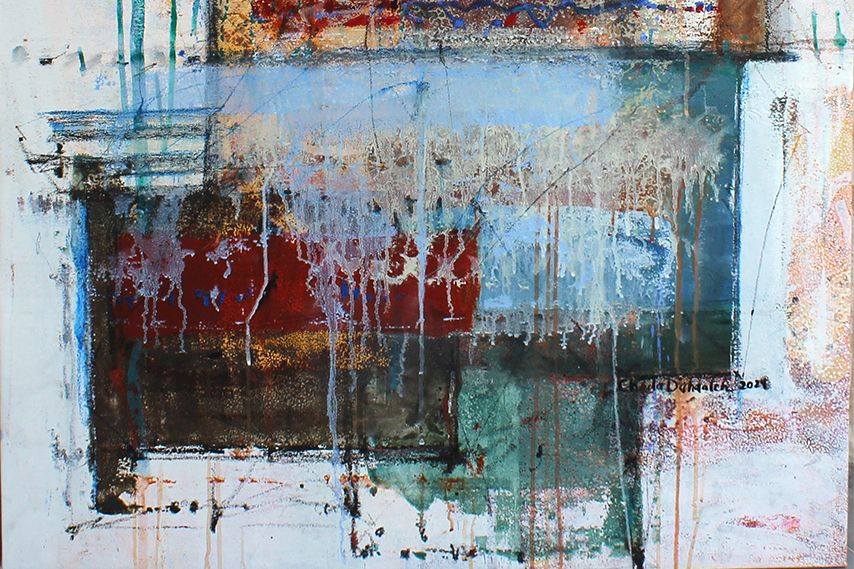
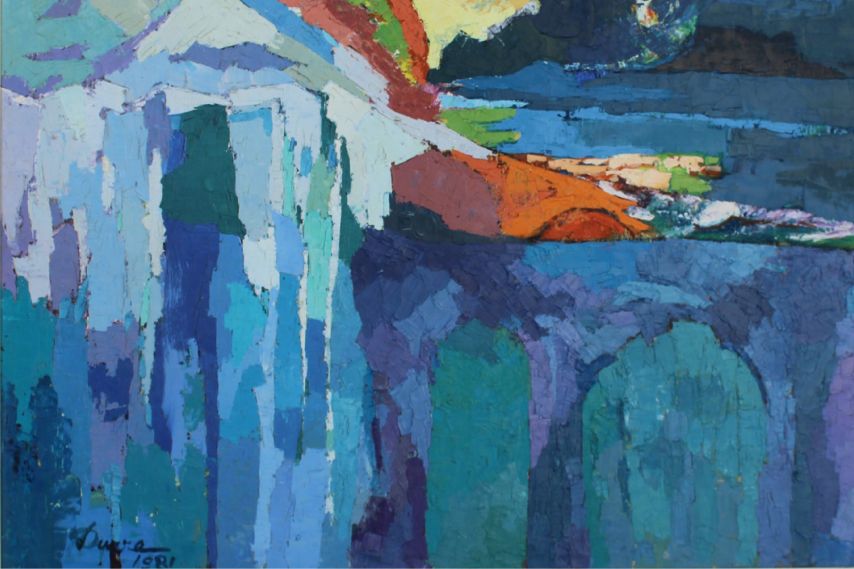
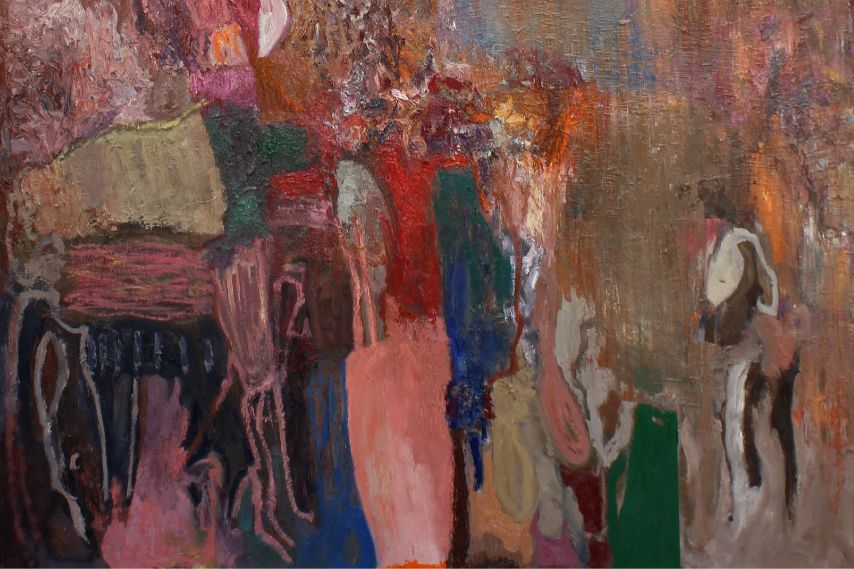
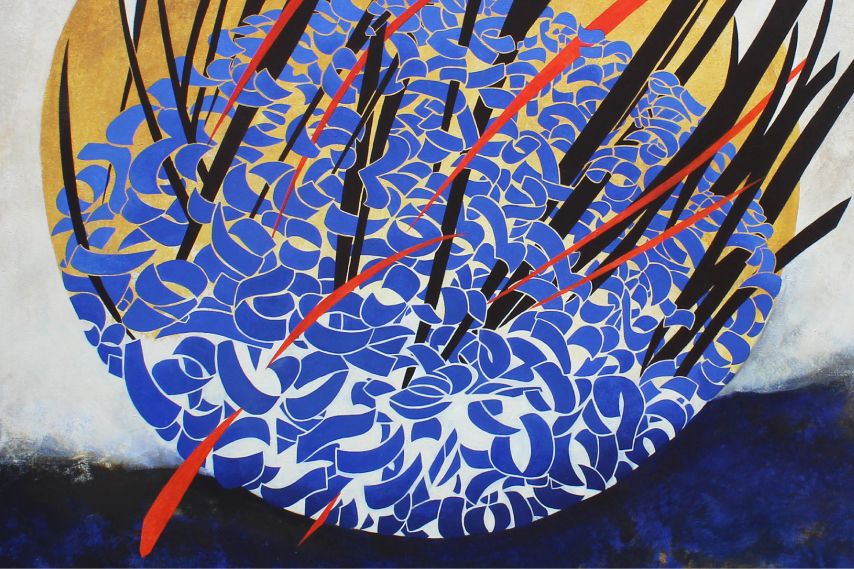
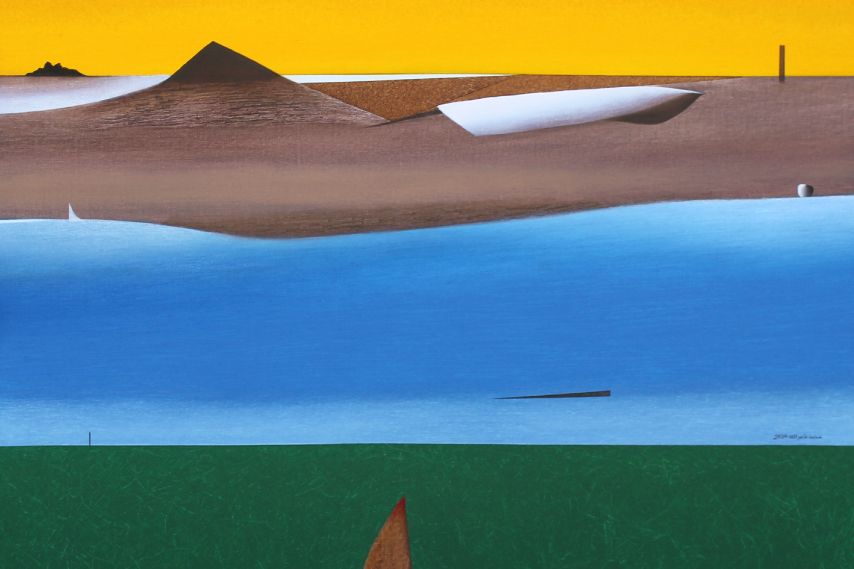
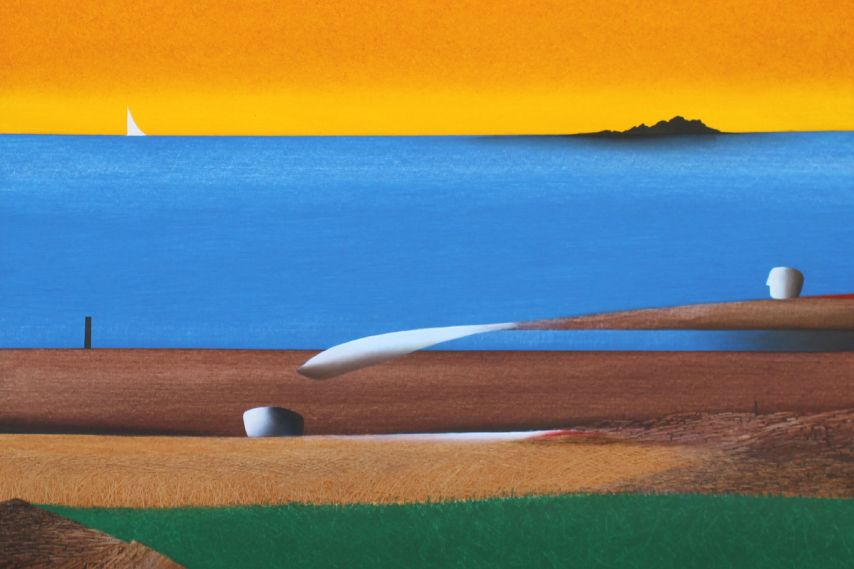
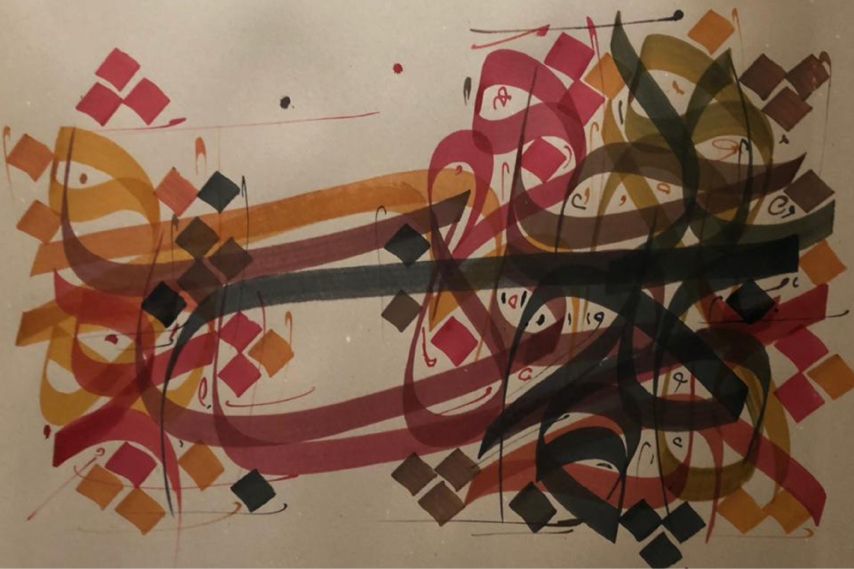
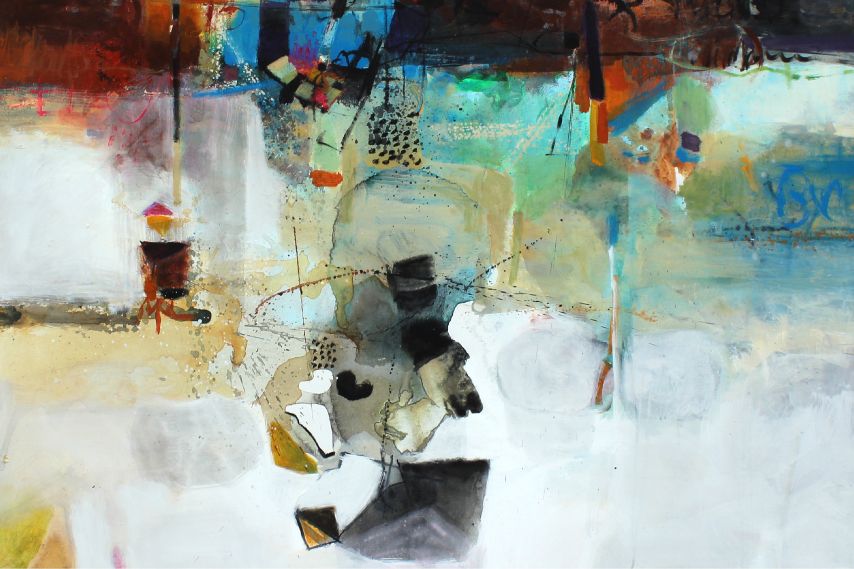
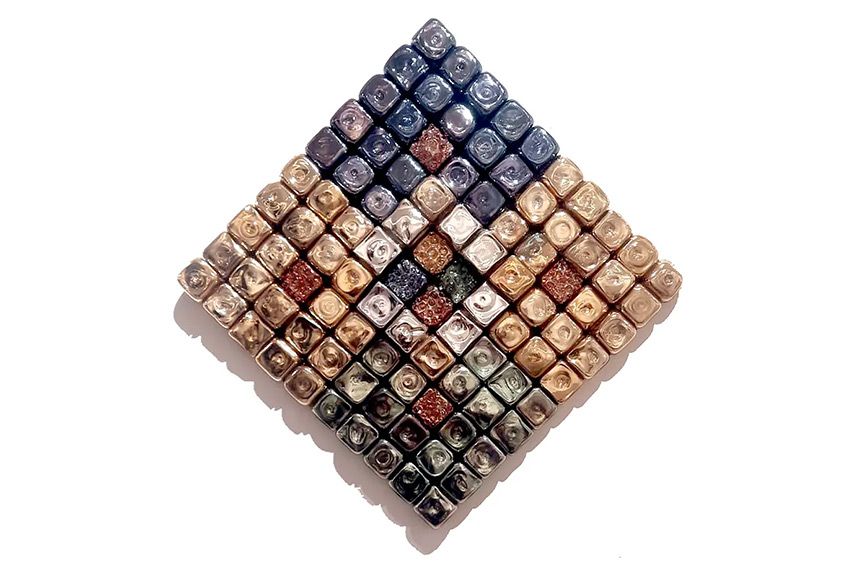
Her paintings feature cheerful colors such as green, blue, and white, which give the viewer a sense of serenity and peace. Her work relies on layers of color, along with materials that evoke the nature of life in refugee camps—where multicolored curtains, pieces of clothing, or fabric might hang on the walls. Through these color gradations and visual balance, the artist creates a powerful emotional impact, stirring the viewer’s feelings and resonating deeply with their emotions.
She adopts an abstract art style, through which she attempts to offer a visual reading of what lies behind those windows and doors—as if they are external vessels through which one can speculate about the signs, meanings, and interpretations of multiple stories. These stories carry a profound human dimension, as they are tied to the artist’s memory of her lost homeland and her ongoing search for anything that connects her to it—even if, in the process, the real blends with the imagined.
Ghada Dahdaleh
Ghada Dahdaleh is a Palestinian artist whose work is distinguished by a unique approach to abstract modernism. Utilizing a diverse array of media, including oil-based inks, graphite, charcoal, and specially formulated chalks, she creates compositions that are as rich in concept as they are in technique. Her fascination with printmaking stems from its ability to capture the spontaneous, almost accidental markings found on the old windows and doors of refugee camps and historic neighborhoods.
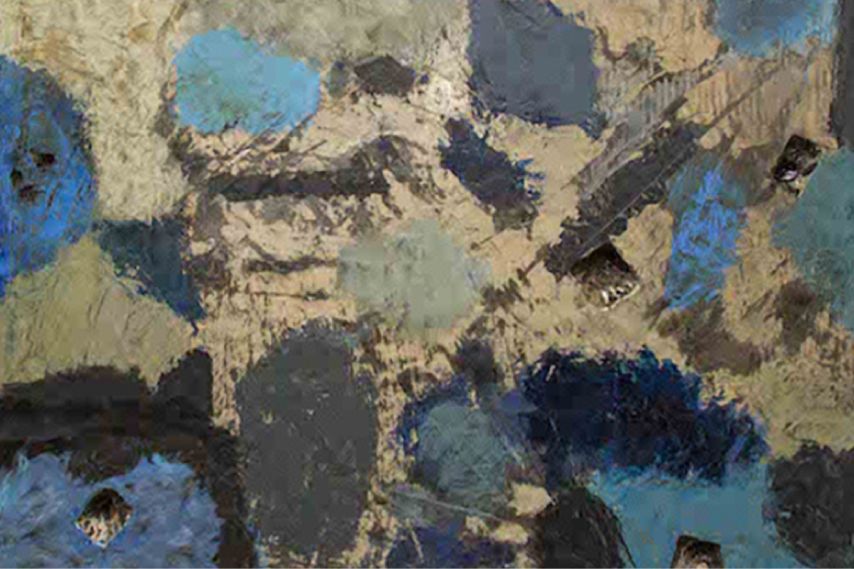
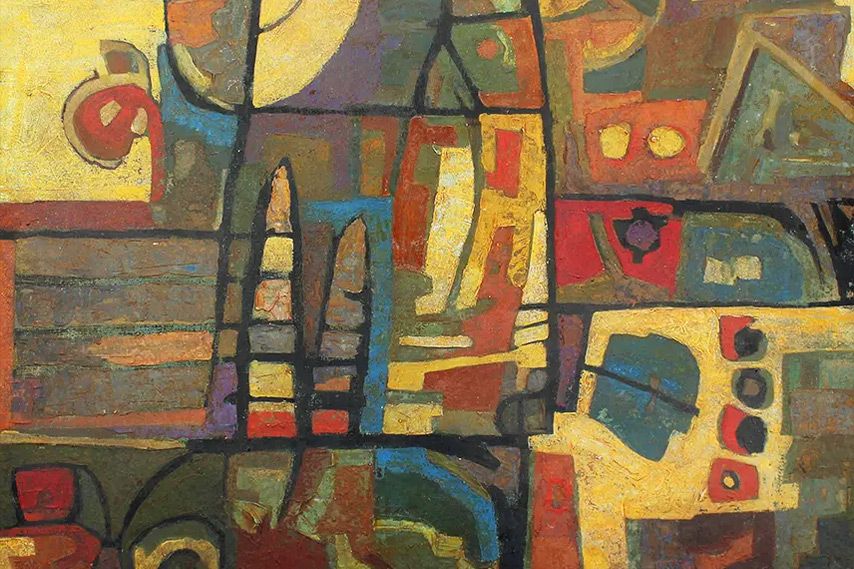
Structured by vertical and horizontal lines that divide the surface into defined sections, her work is often contained within square or rectangular frames, yet she frequently breaks away from these confines, introducing fluid, abstract borders inspired by the eastern symbols and patterns of Arab embroidery, woven rugs, and traditional decorative arts. This painting layers earthy tones, weathered blues, and textured forms to evoke the landscapes, homes, and memories of Palestine. Fragmented walls and softened edges suggest structures shaped by time, while blurred lines and layered surfaces speak to themes of displacement, resilience, and the endurance of identity. In its interplay of architectural form and abstract gesture, the work becomes more than an image; it is a visual memory of a place both lost and ever-present, a testament to survival and beauty amid loss.